Click on the pictures above for larger images
FROM THE "PEOPLE WE WISH WE HAD KNOWN" SERIES
THIS ARTICLE IS REPRINTED AS IT APPEARED IN THE
DuBois Area Historical Society Quarterly Historical Newsletter
Vol. 2011-1 Issue 29-1
BY PERMISSION OF THE AUTHOR
Images follow the article
. " You'll Find It At Gene's Hardware "
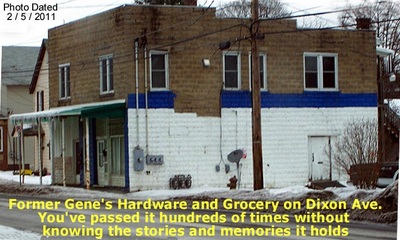
On Dixon Avenue is an empty storefront. For many decades it was the home of some local merchants.
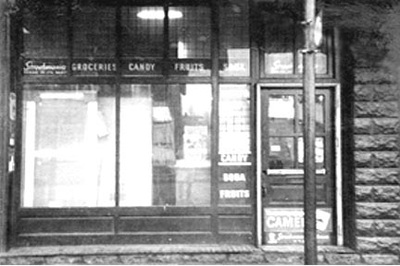
In 1921, 204 Dixon Avenue was the location of a grocery store owned by George N. Gent. Before moving there, his business was at 123 Dixon Avenue. That building was torn down when the new building was built. Along with groceries, he also sold feed and hay. The building is built over Pentz Run creek that runs out of the London Mines. It never stops or dries up, and produce was kept cool in the basement.
In 1942, Gent's son Blaine entered the business. In a front part of the building, his wife Anna ran Gent's Sweet Shop, which was the first in town to carry Sealtest Dairy products. In 1956, the stores were closed.
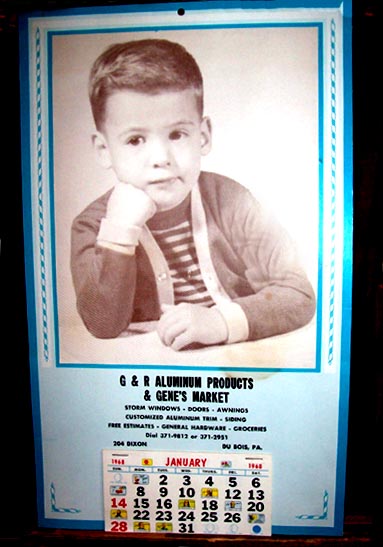
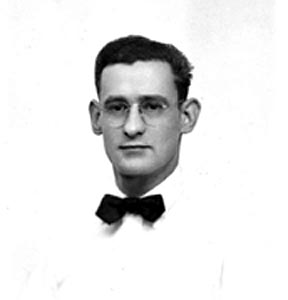
The property was purchased by Gene Aravich in 1956. June 11,1958, was the grand opening of Gene's Market. He had a deli and sliced his meats and cheese. Only half of the first floor was the market; the back half was Toledo Scales which closed soon after. The side door was extra wide to fit all oversized scales.
He tried to include buying and selling old coins since he was a coin collector, but that side of his business never caught on.
Three of Gene's friends worked there part time: Nick Yanek, Bob Carlson and Jim Tudor, Every Thursday was grocery truck delivery day. It took Jim Tudor and Gene's son Gary half the day to put everything away.
Gary used to watch the store for customers while his dad was in the basement cutting meat. Gene would return wiping of his hands on his blood-splattered apron.
Gene owned a very large meat grinder. After he stopped cutting meat, every hunting season he'd loan it to hunters to grind their own deer meat. He never charged them so they paid him in venison.
He would slice ham for events. He bought canned hams from Wilson's Meat Packing Company (where Palumbo's is today). He would be at his store late slicing the ham and running a meat string through the ham slices to hold it together, since no one else did that.
Some old timers would come in speaking different languages. Gary would hold his hand up to stop them and go find his dad. Having served in World War II, Gene could understand some Lithuanian, Polish and German. He said the old timers only shopped at a place where they could be understood and that's why they avoided larger stores.
Gene had been a cook in the army and understood the foods different nationalities ate. He would save chicken tails for the Jewish people who made it into soup.
When Gene's first two children were young, he had pinball machines in the basement. All the kids in the neighborhood would be there and it became their hangout.
Gary remembers when potato chips there were five cents a bag; soda pop was ten cents. There was a large case of penny candy. Candy bars and gum were five cents.
The grocery store continued until the early 1970s when Gene started buying out hardware stores that went out of business.
As the hardware increased, the groceries decreased. Soon he got rid of the groceries and removed a wall to enlarge the sales floor. The back part was now G&R Aluminum. Dick Garthwaite put in windows, aluminum siding and gutters. The store made rubber stamps in one of the basement rooms. In 1973 the store was renamed Gene's Hardware. Locals used to say, "If you can't find it anywhere else, you'll find it at Gene's."
Years ago, under the Blue Laws, every store was closed on Sunday except for little corner mom and pop stores that were only a front room of a house, because they lived there. Gene's was open. Sundays from one until ten.
When he changed to hardware, he was the only hardware store open on Sundays. There were always people there looking for items for home repair or emergencies, mostly plumbing. It wasn't until later that other stores started to open on Sundays. Men called it a 'man's hardware store' because it sold only hardware men needed to do their job, nothing fancy.
He was the only one in town who sharpened hand and circular saws, lawnmower blades and scissors. He also made keys, fixed screens and replaced glass in windows. Jim's Glass Shop brought in all their screens for repairing. Gene was the first in town to sell nails by the pound. He also had a large selection of brick laying tools, so nearly every mason bought from him. He also
sold in bulk to local contractors.
When Hurricane Agnes hit in 1972, Gene was in Canada on a fishing trip. Being built over the creek, the basement flooded. Water ran in under the front door and met up with the water that had risen four feet in the cellar. Gary slept out there for three nights to take care of the building.
Gene's niece Marianne Madere sold lobsters in the store parking lot summer 1975. She took orders and went to Maine with her dad Hank to pick them up.
In the 1980s Gene added a coal burner to help with heating. The old building was much warmer but everything was covered in a light film of coal dust. Gene kept a feather duster in his back pocket to dust the wares off to see the price tag. He rarely changed prices on items. One local joked that he returned to the hardware store every time he was back in town because he could still find what he needed for prices from years back.
As years passed, neighborhood stores were phased out as chain stores entered the area. Gene could often be found sitting on a stool near the side entrance, a cigarette in one hand and a paperback western in the other.
One night the store was broken into and a large antique cash register was removed. The cash drawer was closed, so the vandals assumed the money was inside. The heavy cash register was hauled away and later found smashed open. It was filled with Monopoly money.
The power used to go out often, so Gene stopped using that cash register long ago, favoring an old fashioned register that had a handle to crank for each transaction. Gene's daughter and her family lived next door and his grandsons often played with the unused cash register.
The store continued until the 1996 when Gene's health began to decline. The store and contents were auctioned off. The day of the auction, Boy Scouts sold hot dogs and sodas to the crowd. Many Amish men attended to bid on the hardware.
Ed Sikora purchased the property and completely remodeled the two apartments upstairs. The former store was a pizza shop briefly and then Hockman Candy Shop before it moved uptown.
The building is vacant now, but alive with memories of all the children who played pinball in the basement, the adults who purchased their groceries and hardware there, and the 'regulars' who spent hours visiting and arguing politics with Gene.
Gene M. Aravich
.
FROM THE "PEOPLE WE WISH WE HAD KNOWN" SERIES
THIS ARTICLE IS REPRINTED AS IT APPEARED IN THE
DuBois Area Historical Society Quarterly Historical Newsletter
Vol. 2011-1 Issue 29-1
BY PERMISSION OF THE AUTHOR
Images follow the article
. " You'll Find It At Gene's Hardware "
On Dixon Avenue is an empty storefront. For many decades it was the home of some local merchants.
In 1921, 204 Dixon Avenue was the location of a grocery store owned by George N. Gent. Before moving there, his business was at 123 Dixon Avenue. That building was torn down when the new building was built. Along with groceries, he also sold feed and hay. The building is built over Pentz Run creek that runs out of the London Mines. It never stops or dries up, and produce was kept cool in the basement.
In 1942, Gent's son Blaine entered the business. In a front part of the building, his wife Anna ran Gent's Sweet Shop, which was the first in town to carry Sealtest Dairy products. In 1956, the stores were closed.
The property was purchased by Gene Aravich in 1956. June 11,1958, was the grand opening of Gene's Market. He had a deli and sliced his meats and cheese. Only half of the first floor was the market; the back half was Toledo Scales which closed soon after. The side door was extra wide to fit all oversized scales.
He tried to include buying and selling old coins since he was a coin collector, but that side of his business never caught on.
Three of Gene's friends worked there part time: Nick Yanek, Bob Carlson and Jim Tudor, Every Thursday was grocery truck delivery day. It took Jim Tudor and Gene's son Gary half the day to put everything away.
Gary used to watch the store for customers while his dad was in the basement cutting meat. Gene would return wiping of his hands on his blood-splattered apron.
Gene owned a very large meat grinder. After he stopped cutting meat, every hunting season he'd loan it to hunters to grind their own deer meat. He never charged them so they paid him in venison.
He would slice ham for events. He bought canned hams from Wilson's Meat Packing Company (where Palumbo's is today). He would be at his store late slicing the ham and running a meat string through the ham slices to hold it together, since no one else did that.
Some old timers would come in speaking different languages. Gary would hold his hand up to stop them and go find his dad. Having served in World War II, Gene could understand some Lithuanian, Polish and German. He said the old timers only shopped at a place where they could be understood and that's why they avoided larger stores.
Gene had been a cook in the army and understood the foods different nationalities ate. He would save chicken tails for the Jewish people who made it into soup.
When Gene's first two children were young, he had pinball machines in the basement. All the kids in the neighborhood would be there and it became their hangout.
Gary remembers when potato chips there were five cents a bag; soda pop was ten cents. There was a large case of penny candy. Candy bars and gum were five cents.
The grocery store continued until the early 1970s when Gene started buying out hardware stores that went out of business.
As the hardware increased, the groceries decreased. Soon he got rid of the groceries and removed a wall to enlarge the sales floor. The back part was now G&R Aluminum. Dick Garthwaite put in windows, aluminum siding and gutters. The store made rubber stamps in one of the basement rooms. In 1973 the store was renamed Gene's Hardware. Locals used to say, "If you can't find it anywhere else, you'll find it at Gene's."
Years ago, under the Blue Laws, every store was closed on Sunday except for little corner mom and pop stores that were only a front room of a house, because they lived there. Gene's was open. Sundays from one until ten.
When he changed to hardware, he was the only hardware store open on Sundays. There were always people there looking for items for home repair or emergencies, mostly plumbing. It wasn't until later that other stores started to open on Sundays. Men called it a 'man's hardware store' because it sold only hardware men needed to do their job, nothing fancy.
He was the only one in town who sharpened hand and circular saws, lawnmower blades and scissors. He also made keys, fixed screens and replaced glass in windows. Jim's Glass Shop brought in all their screens for repairing. Gene was the first in town to sell nails by the pound. He also had a large selection of brick laying tools, so nearly every mason bought from him. He also
sold in bulk to local contractors.
When Hurricane Agnes hit in 1972, Gene was in Canada on a fishing trip. Being built over the creek, the basement flooded. Water ran in under the front door and met up with the water that had risen four feet in the cellar. Gary slept out there for three nights to take care of the building.
Gene's niece Marianne Madere sold lobsters in the store parking lot summer 1975. She took orders and went to Maine with her dad Hank to pick them up.
In the 1980s Gene added a coal burner to help with heating. The old building was much warmer but everything was covered in a light film of coal dust. Gene kept a feather duster in his back pocket to dust the wares off to see the price tag. He rarely changed prices on items. One local joked that he returned to the hardware store every time he was back in town because he could still find what he needed for prices from years back.
As years passed, neighborhood stores were phased out as chain stores entered the area. Gene could often be found sitting on a stool near the side entrance, a cigarette in one hand and a paperback western in the other.
One night the store was broken into and a large antique cash register was removed. The cash drawer was closed, so the vandals assumed the money was inside. The heavy cash register was hauled away and later found smashed open. It was filled with Monopoly money.
The power used to go out often, so Gene stopped using that cash register long ago, favoring an old fashioned register that had a handle to crank for each transaction. Gene's daughter and her family lived next door and his grandsons often played with the unused cash register.
The store continued until the 1996 when Gene's health began to decline. The store and contents were auctioned off. The day of the auction, Boy Scouts sold hot dogs and sodas to the crowd. Many Amish men attended to bid on the hardware.
Ed Sikora purchased the property and completely remodeled the two apartments upstairs. The former store was a pizza shop briefly and then Hockman Candy Shop before it moved uptown.
The building is vacant now, but alive with memories of all the children who played pinball in the basement, the adults who purchased their groceries and hardware there, and the 'regulars' who spent hours visiting and arguing politics with Gene.
Gene M. Aravich
.